
Planowane wyłączenie 2G: co musisz wiedzieć i jak się przygotowa
- 01.09.2025
- Producent: Trikdis
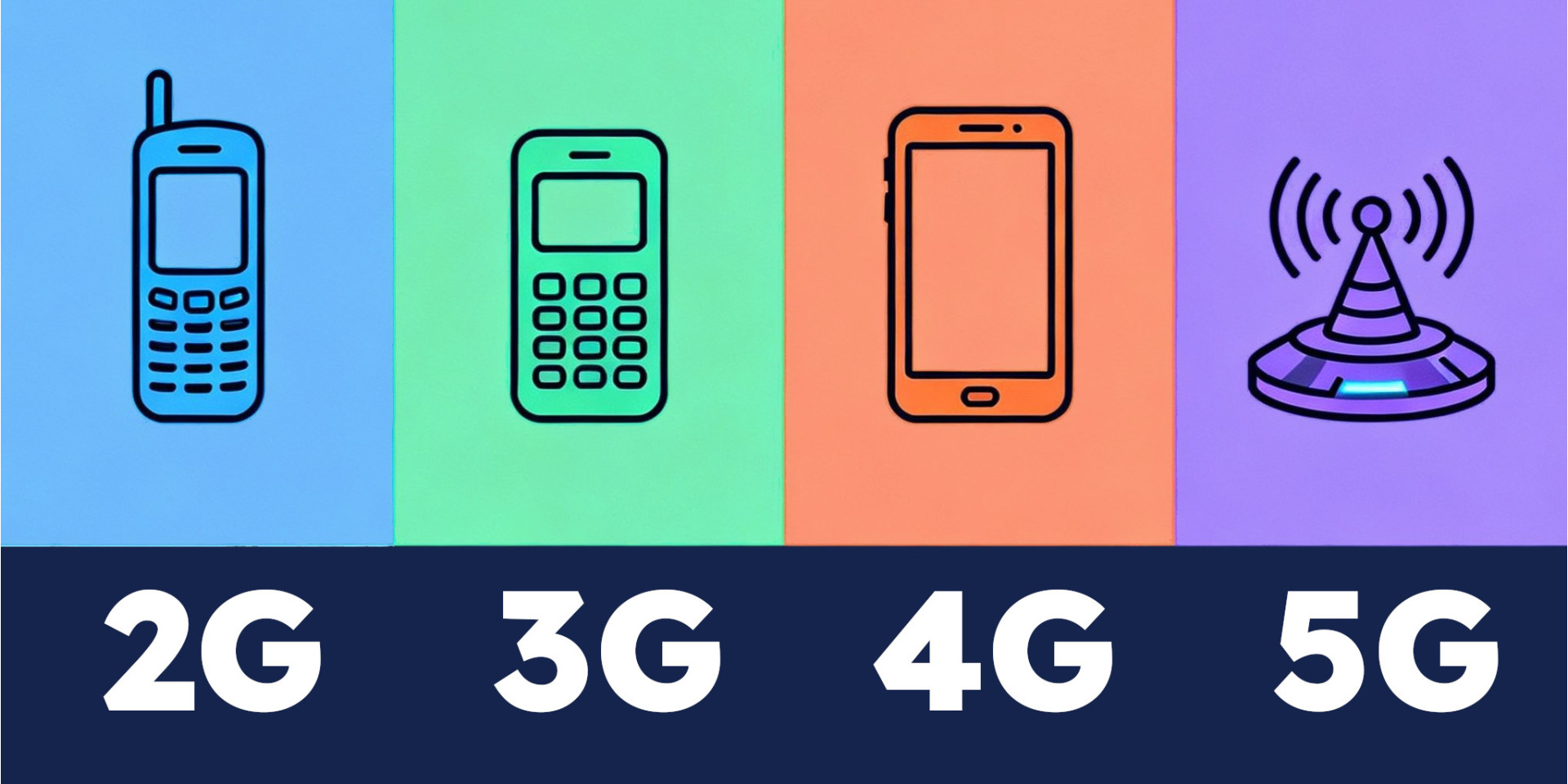
Concrete details are finally emerging about the 2G phase-out timeline across Europe, ending a period of uncertainty. The 2G service will remain for now, but the final switch-off is coming into focus. This change poses a significant challenge for security technology and remote monitoring professionals, while also opening new development opportunities.
What we know
Across Europe, 2G networks are being gradually phased out by the end of the decade (approximately 2028–2030), with exact timelines varying by country and operator. In many markets, mobile operators are now sharing 2G infrastructure to reduce costs while maintaining service for remaining users. The trend is clear: 2G data traffic has fallen to a tiny fraction of total mobile data, yet millions of IoT and M2M devices still rely on it.
Who is affected?
IoT and M2M devices operating on 2G networks include: payment terminals, ATMs, alarm systems, gate controllers, remote monitoring systems, GPS trackers, and industrial sensors. These devices often have longer replacement cycles than consumer phones, making timely planning essential.
What happens after switch-off?
- Devices that support only 2G will stop working.
- In areas with weak 4G coverage, even 4G-capable devices may experience connectivity issues after 2G is removed.
Operators will notify users through various campaigns. Additional frequency spectrum freed up by 2G switch-off will help improve 4G/5G coverage, but some devices will simply lose connectivity — potentially without warning if the owner is unaware of the change.
Practical steps for industry professionals
- New installations: Always inform customers about the upcoming switch-off and recommend 4G-capable devices, even if 2G seems cheaper today.
- Existing installations: Conduct an audit to identify which systems use 2G and prioritise critical installations for replacement.
- Redundancy: Where possible, add a backup data channel — Ethernet or WiFi alongside a 4G communicator.
- Coverage check: Verify 4G coverage at installation sites using your local operator coverage maps before committing to new hardware.
Narrowband IoT (NB-IoT)
Designed for low-data IoT devices, NB-IoT provides excellent coverage even through thick walls or underground. Its very low power consumption enables long battery life, ideal for fixed installations such as meters, sensors, or alarms. Not suitable for real-time or mobile applications due to higher latency.
LTE-M (Cat-M1)
An IoT-optimised variant of 4G, LTE-M supports voice (VoLTE) and mobility, making it well suited for moving devices such as vehicle trackers or portable health devices. It offers lower latency and higher data speed than NB-IoT, at slightly higher power and cost.
How Trikdis can help
Trikdis offers 4G-capable communicators and alarm control panels to replace 2G devices, with remote configuration tools to minimise on-site work. Contact us to discuss a planned replacement programme for your installed base.
Tagi:
Powiązane artykuły
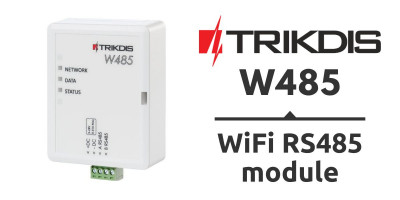
Premiera produktu – Moduł WiFi RS485 Trikdis W485
- 30.01.2019
Moduł WiFi W485 zapewnia redundantny kanał komunikacyjny obok komunikatorów GSM Trikdis przez połączenie RS485.
Czytaj więcej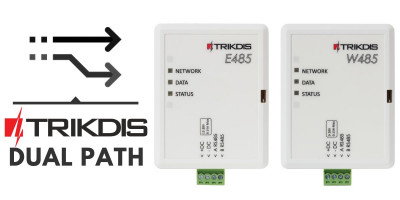
Dual path – rozwiązania z redundantnym kanałem od Trikdis
- 01.12.2019
Moduły Trikdis W485/E485: redundantny kanał komunikacyjny obok komunikatorów GSM, z niższymi kosztami danych.
Czytaj więcej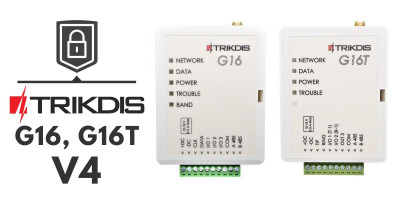
Dostępna 4. rewizja sprzętowa modułu komunikacyjnego GSM G16 i G
- 14.04.2020
Najważniejsza nowość w wersji sprzętowej G16 i G16T v4: elastycznie konfigurowalne styki I/O.
Czytaj więcej
Pasma częstotliwości 4G/LTE używane w Europie
- 05.07.2022
Pełna lista pasm częstotliwości 4G/LTE używanych w Europie. Przydatne odniesienie przy wyborze odpowiedniego modułu komunikacyjnego Trikdis GSM.
Czytaj więcejPowiązane produkty
Trikdis G16 2G GSM inteligentny moduł komunikacyjny
Komunikator GSM Trikdis G16 2G jest kompatybilny z centralami alarmowymi Paradox, DSC i innych produ..
€128,90 Cena netto: €104,80
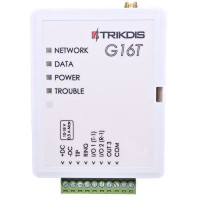
Trikdis G16T 2G GSM inteligentny moduł komunikacyjny (TIP-RING)
inteligentny system alarmowy, inteligentny dom, inteligentny komunikator, komunikator GSM, komunikator IP
€84,90 €128,90 Cena netto: €69,02
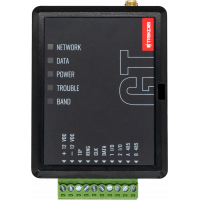
Trikdis GT 4G inteligentny moduł komunikacyjny
Trikdis GT 4G to inteligentny moduł komunikacyjny łączący funkcje modeli G16 i G16T.Można go bezpośr..
€174,90 Cena netto: €142,20
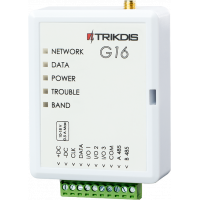
Trikdis G16 4G GSM inteligentny moduł komunikacyjny
inteligentny system alarmowy, inteligentny dom, inteligentny komunikator, komunikator GSM, komunikator IP
€164,90 Cena netto: €134,07
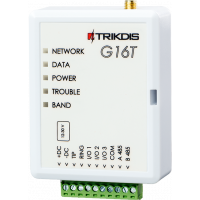
Trikdis G16T 4G GSM inteligentny moduł komunikacyjny (TIP-RING)
inteligentny system alarmowy, inteligentny dom, inteligentny komunikator, komunikator GSM, komunikator IP
€174,90 Cena netto: €142,20